
Build a More Connected Intelligence Graph
Add structured public intelligence to your TIP, graph store, or CTI platform to enrich existing holdings and improve connections across your intel environment.
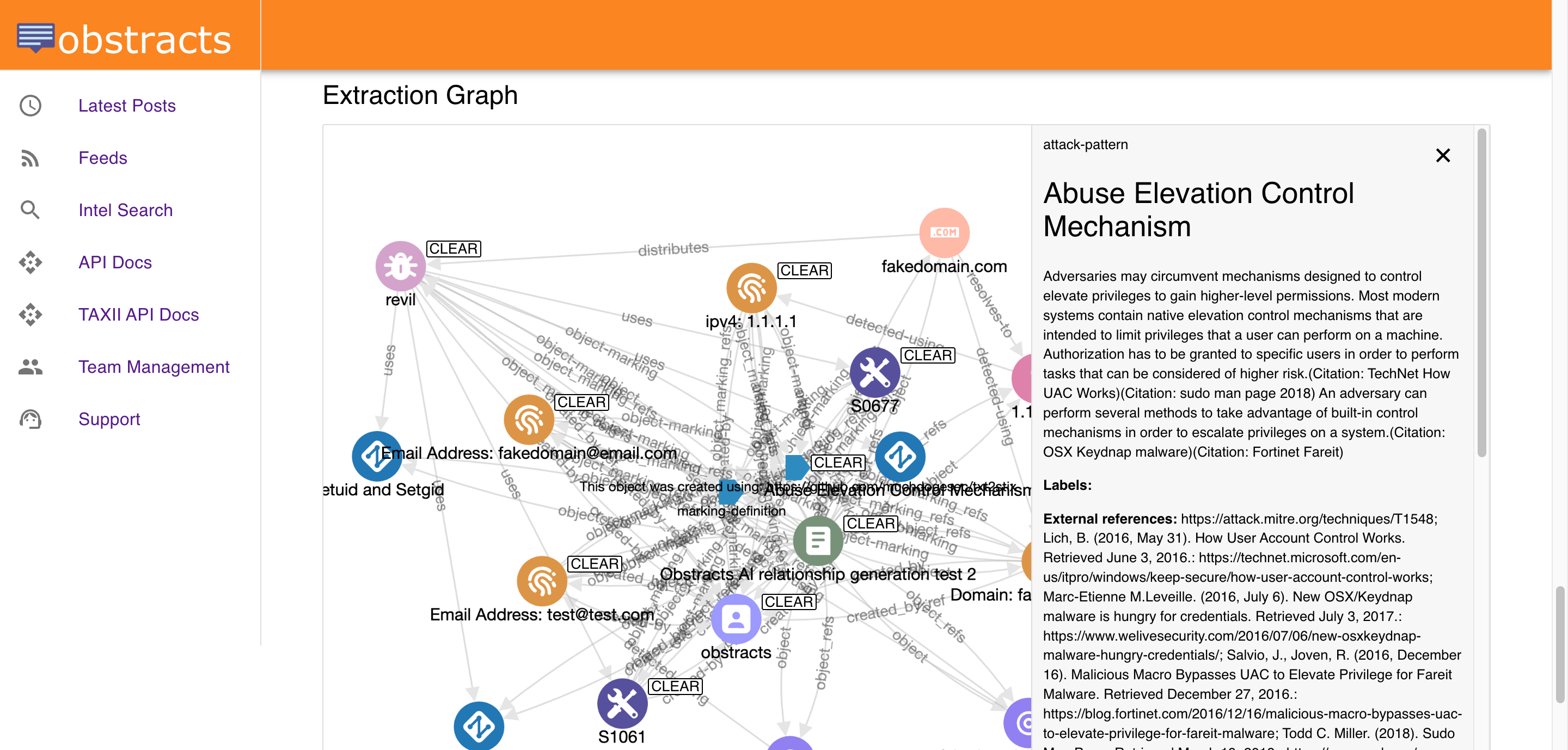
Overview
An intelligence graph becomes more useful as it becomes more connected.
Many teams already maintain a TIP, CTI platform, graph database, or internal datastore that acts as a central knowledge layer. The challenge is making sure public reporting contributes to that graph in a structured, reusable way instead of living outside it as disconnected references.
Obstracts helps solve that by turning public reporting into structured intelligence that can enrich existing holdings, add new relationships, and strengthen the context around the objects your team already knows about.
What this outcome looks like
Building a more connected intelligence graph means:
- Adding IoCs, TTPs, malware, actors, and relationships from public reporting
- Linking new public objects to existing internal holdings
- Improving correlation across external and internal intelligence
- Giving analysts more context when they pivot through the graph
- Expanding the usefulness of existing TIP or CTI investments
This is not just about adding more data. It is about improving the shape of the data you already rely on.
Why this matters
Graphs and TIPs are only as useful as the intelligence flowing into them.
If public reporting is handled manually, a lot of useful context never makes it into the system. That can leave gaps in relationships, weaker enrichment, and less confidence when analysts try to understand how a new object fits into the broader picture.
Structured public intelligence helps close those gaps.
Where Obstracts fits
Obstracts provides a structured input layer for public reporting.
That makes it easier to:
- enrich a TIP
- expand an internal graph
- support correlation with existing objects
- add public references to current investigations
- make external intelligence available where analysts already work
This is especially valuable for organisations that already have mature intelligence tooling but want stronger external context inside it.
What makes this a solution, not just a feature
The outcome depends on more than export alone:
- structured extraction makes public reporting portable
- object-level pivots make it easier to understand related activity
- integrations make the data available in other systems
- graph enrichment improves future analysis, not just the current case
That is what turns public reporting into a durable intelligence asset instead of a one-time reference.